
Pectin extraction moves a fraction of the plant material into liquid. The plant then has to remove suspended solids, separate dissolved substances and recover a product that the buyer can use. Ask for samples and measured flows from one complete trial run. Together they show where material was retained, where impurities went and how much accepted powder reached the end.
Agree on samples and product checks first
Draw the feed, the suspension coming out of extraction, the clarified extract, the purification streams and the finished ingredient. Give each sampling point a code that matches the trial log. Record when samples are taken and what was happening in the vessel or transfer line. If an operator uses liquid for rinsing or sends part of the extract away for testing, record the quantity. A useful balance lets someone trace each sample back to the run and distinguish a real loss from a missing measurement.
Set the test around the intended product. If the pectin will be used in a fruit filling, ask the customer when texture will be judged and what happens at filling before that measurement. Agree composition, moisture basis and any application tests with the quality team. A reference lot helps the customer compare performance using the same recipe, preparation and measuring time. Review the pectin product information and the degree of esterification guide to prepare the discussion.
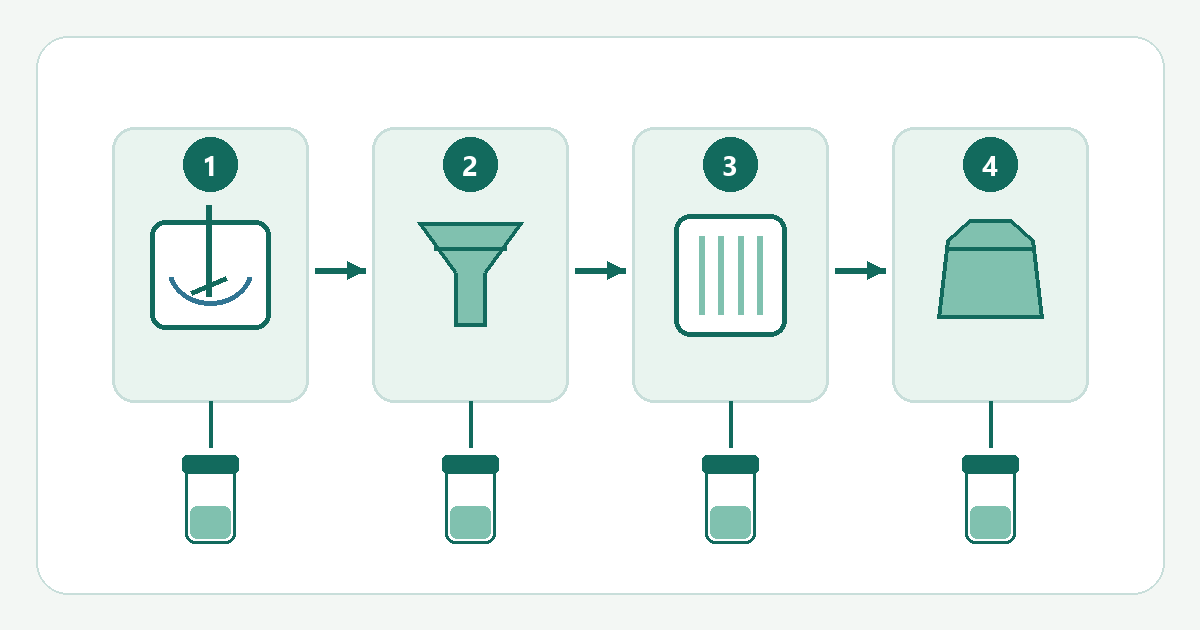
Measure both streams coming out of extraction
Record the feed condition and the dry matter in the material entering extraction. Fresh citrus peel and dried apple pomace may require different records for water already present and for the amount added. Include intermediate material returned from another stage. At the outlet, measure the liquid and remaining solids and take representative samples. Total dissolved solids include substances other than pectin. Agree which analysis can answer a question about the target fraction, and record the method alongside the result.
Check the conditions behind the sample. Two extracts can look similar in a small container while one took longer to discharge. A trace of settling or material remaining in the vessel can affect what is available for the next stage. Ask the trial team to record the start of transfer, the end of discharge and any hold. Design needs the full time from loading through preparing the equipment for the next batch as well as the extraction interval.
A study of commercial peel from several citrus fruits examined how source and extraction conditions relate to the pectins obtained. Take the same care with trial identification. If you change raw material and the chosen condition in the same trial, record both and plan a repeat that can explain the factor you need to study. The feedstock storage guide covers information to collect before the sample enters the process. Study of citrus pectin extraction conditions
Use clarification times and residue measurements together
Clarification separates liquid from suspended or coarse solids. Weigh what goes in, measure filtrate and wet residue, and note the state of the last portion. Ask when steady flow began, how it changed across the cycle and how long discharge and cleanup took. Retained liquid in the residue can be important to the balance. Plan a practical way to measure it or estimate it with a documented sample, then report the resulting uncertainty.
Look at the separated streams together. A clear filtrate can be encouraging, especially if the buyer has a colour or appearance requirement, and you still need the quantities and analyses to tell where the solids went. Ask whether the line was emptied and what remained in the equipment. If the missing mass appears in residue, check its liquid content. If particulate matter passes into the filtrate, check how the next stage is affected and which operation should be tested again.
Ask for the end of the run
The first container of clear extract is an easy one to photograph. Ask the operator to retain the record for the later portions too. Mark when the flow rate changed, how they handled it and which time went into cleaning before the repeat. If a second shift needs longer to restore the same performance, find out whether feed properties, setup or the actual cleaning task changed. Compare those records before pricing a larger unit.
Define the task for every purification step
Name the property or substance the step is meant to change. For example, the product might need an agreed colour or a limit on a selected fraction. Identify the sampling and measurement method for each criterion. Use paired samples and include the stream removed from the process. If the step also dilutes or concentrates the extract, calculate the amounts alongside the concentrations so the team can see whether material was actually removed.
For a proposed membrane stage, request feed, retained stream and permeate data, plus throughput across the cycle and what returns after cleaning. Locate the cleaning and rejected streams in the balance. Add their timing to the utility demand worksheet. For the overall sequence, discuss the endpoint and a representative trial with the pectin process team.
For recovery, ask which materials enter the stage, which product leaves it and how any recoverable material is counted. A circulating stream may appear in several operating records. Show it as a return on the diagram and keep it within the chosen boundary. The purchasing team also needs to know which proposal meets the buyer's conditions on process materials. Use the alcohol-free process evaluation to frame those questions.
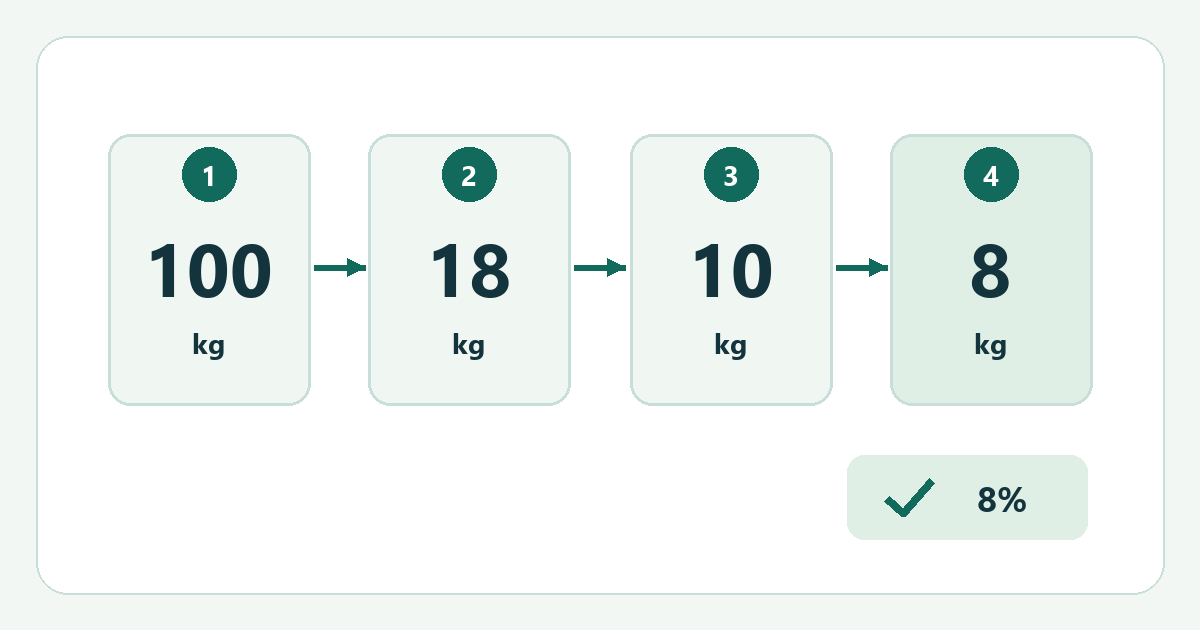
Calculate accepted yield on a common basis
Imagine a trial with 100 kg of dry feedstock. The liquid leaving extraction contains 18 kg of total dissolved solids. After recovery and drying, the trial produces 10 kg of powder, of which 8 kg pass the agreed checks. For accepted product per dry input in this example, the figure is 8 kg per 100 kg, or 8%. Give the powder an agreed moisture basis. Each quantity answers a question at its own stage, and the specification gives the release figure its meaning.
Ask the team to present a worksheet with mass, moisture basis, analysis, time and destination for every stream. If a blend ingredient enters before packing, put its mass on a separate line. Include held powder and any material used for testing. Finance, the lab and the equipment supplier can then reproduce the calculation. If the next run uses another batch, keep the worksheet layout and show which data changed before you compare the outcomes.
Review drying and application on the same lot record
Take a representative powder sample. Keep its link to wet material entering the dryer, the production record and any blending or packing. Ask the quality team to check moisture and agreed physical attributes on the same basis used in the quote. The buyer can then test it in the intended recipe. When a standardised blend is part of the proposal, document how the base material performed and which result belongs to the packed ingredient.
Suppose a filling thickens during dosing before the buyer can complete the trial. Preserve the sample code, recipe settings and measurement time before changing the process. Review the record from separation through drying and compare it with the reference sample. Decide which quality measurement or repeat test will explain the result. The buyer may also have an observation about preparation in the kitchen or the time the sample spent waiting that is useful in the next run.
Package the evidence for a design decision
Give engineering the stream diagram, measurements, cycle lengths and the buyer's test outcome. Mark uncertain quantities and who can resolve them. Some open points affect equipment area or the number of batches per shift. Others affect the specification, the amount placed on hold or a connection to the site's utilities. Use that mapping in the engineering and EPCM brief so another team can see how the trial changed the design.
Put repeat results beside the first run. An equipment acceptance plan can name the feed range, the measurements performed during the run, the time allowed for cleaning and the definition of an accepted batch. If someone asks for a production rate before those inputs are agreed, ask which parts of it are observed today and which parts will be checked on the next trial. Keep the sampling plan with the figures to make the comparison possible after installation.
Make one run review with the person who took the samples. Check the actual drawer or vessel against the drawing and identify where a late sample was entered as an earlier one. These small corrections improve the next balance. When the operation involves a return or a hold, record its measured quantity before deciding whether it can be credited to the next batch.
Share your feedstock, product specification and an available trial log with Soltex Global to agree which stages to verify before selecting equipment.